<?xml version="1.0" encoding="utf-8"?>
<rss version="2.0"
    xmlns:dc="http://purl.org/dc/elements/1.1/"
    xmlns:sy="http://purl.org/rss/1.0/modules/syndication/"
    xmlns:admin="http://webns.net/mvcb/"
    xmlns:rdf="http://www.w3.org/1999/02/22-rdf-syntax-ns#"
    xmlns:content="http://purl.org/rss/1.0/modules/content/">

    <channel>
    
    <title><![CDATA[Blog]]></title>
    <link>http://dev.gddf.org/</link>
    <description></description>
    <dc:language>en</dc:language>
    <dc:creator>liz@gddf.org</dc:creator>
    <dc:rights>Copyright 2012</dc:rights>
    <dc:date>2012-05-11T12:29:44+00:00</dc:date>
    <admin:generatorAgent rdf:resource="http://expressionengine.com/" />
    

    <item>
      <title><![CDATA[Sewee to Santee eyes smart growth through regional branding]]></title>
      <link>http://gddf.org/blog/2012/05/11/sewee-to-santee-eyes-smart-growth-through-regional-branding</link>
      <guid>http://gddf.org/blog/2012/05/11/sewee-to-santee-eyes-smart-growth-through-regional-branding#When:12:29:44Z</guid>
      <description><![CDATA[<p>
	For rural communities suffering from poverty, development can seem like a no-brainer: if you build it, they will come, bringing jobs and opportunities with them. But as sprawl across the country has shown, development can come at the expense of a rural community&rsquo;s own character and sense of place, and can leave areas ravaged when companies that built there leave for cheaper pastures. In the Sewee to Santee region of South Carolina, a vision is forming: a better quality of life for its residents built on the belief that a rich rural landscape is an opportunity, rather than an obstacle to be overcome.</p>
<p>
	For rural communities suffering from poverty, development can seem like a no-brainer: if you build it, they will come, bringing jobs and opportunities with them. But as sprawl across the country has shown, development can come at the expense of a rural community&rsquo;s own character and sense of place, and can leave areas ravaged when companies that built there leave for cheaper pastures. In the Sewee to Santee region of South Carolina, a vision is forming: a better quality of life for its residents built on the belief that a rich rural landscape is an opportunity, rather than an obstacle to be overcome.</p>
<p>
	{slideshow}</p>
<p>
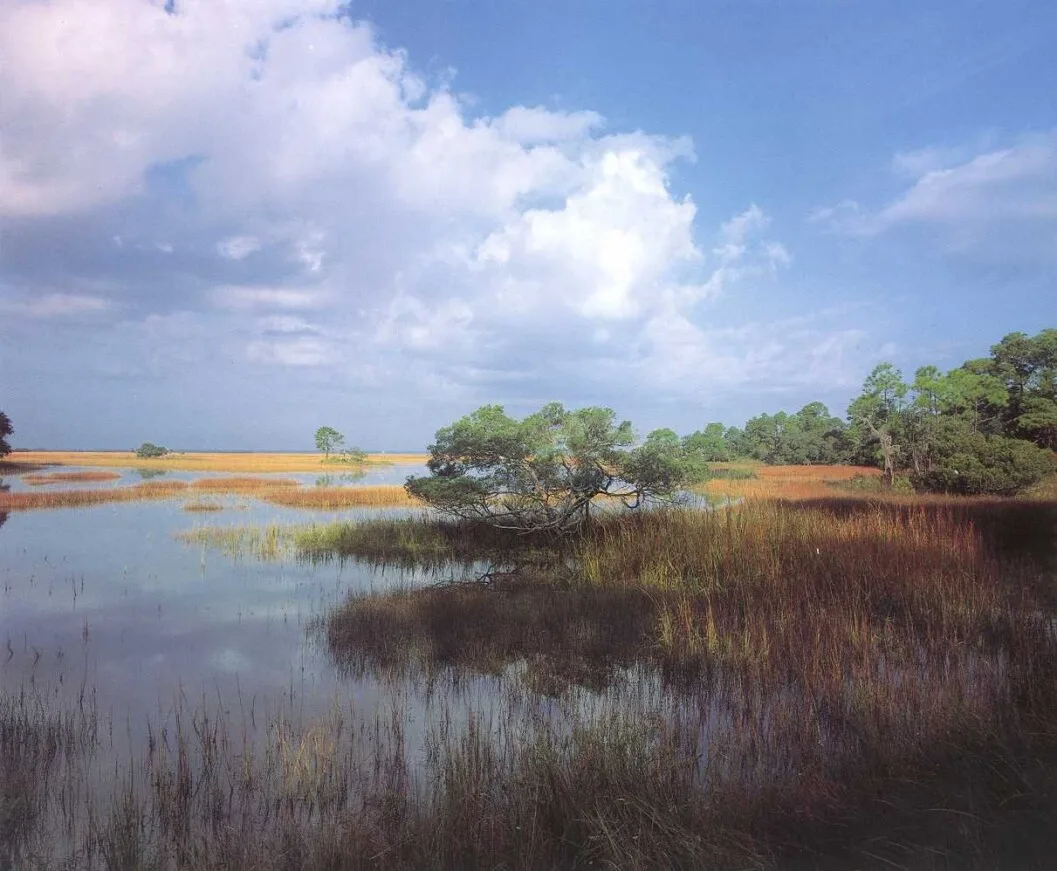
	About 25 miles northeast of Charleston, the <a class="yellow" href="http://www.nature.org/ourinitiatives/regions/northamerica/unitedstates/southcarolina/placesweprotect/seweetosantee_7_15.pdf">Sewee to Santee</a> region stretches from the outskirts of Mount Pleasant almost to Georgetown. Almost 6,000 people live in the area, mostly along U.S. Highway 17 in towns such as <a class="yellow" href="http://www.awendawsc.org/">Awendaw</a> and <a class="yellow" href="http://www.townofmcclellanville-sc.net/">McCellanville</a>. The region includes 22 miles of Atlantic coastline preserved within the <a class="yellow" href="http://www.fws.gov/caperomain/">Cape Romain National Wildlife Refuge</a>, and further inland over 200,000 acres of longleaf pine habitat and marshlands in the <a class="yellow" href="http://www.fs.usda.gov/scnfs/">Francis Marion National Forest</a>. These natural resources make the region well-loved for outdoor recreation including fishing, hiking, kayaking, hunting, camping and bird watching, and have helped keep it safe from overdevelopment. Sewee to Santee has been a beautiful, calm place to live for as long as its people&mdash;some of whom have <a class="yellow" href="http://www.nps.gov/guge/index.htm">roots in the area</a> tracing back 300 years&mdash;can remember. But as residents struggle to maintain <a class="yellow" href="http://lowcountryhousingtrust.org/blog/2012/03/21/lht-receives-grant-to-study-housing-needs-in-sewee-to-santee-area/">homeownership</a>, pay bills, and find jobs close to home, it&rsquo;s clear that Sewee to Santee needs smart growth as much as it needs to preserve its special natural character.</p>
<p>
	In early May, an important step towards this goal was realized when about 35 charter members of the new Sewee Chamber of Commerce came together at Driftwood Plantation to kick off plans to brand the region between Awendaw and McClellanville. The branding plan is simple: promote Sewee to Santee as the unique destination it is, highlight its distinctive assets, and encourage regional growth at an appropriate scale. Charter members represent businesses of all kinds&mdash;the renowned food of <a class="yellow" href="http://www.ourcharlestonhome.com/Sewee-Restaurant">Seewee Restaurant</a>, outdoor recreation at <a class="yellow" href="http://seweeoutpost.com/">Sewee Outpost</a> and <a href="http://www.coastalexpeditions.com/">Coastal Expeditions</a>, local agriculture from <a href="http://growfoodcarolina.com/">Grow Food Carolina</a> and <a class="yellow" href="http://driftwoodplantation.com/">Driftwood Plantation</a>, to name a few. All charter members are working together to bring measured, sustainable growth to the region from within. Branding Sewee to Santee is an important part of the process and a big victory to come for the small towns that breathe life into this special place.</p>
<p>
	<em>Further reading:</em></p>
<p>
	<em>More about our work with the <a class="yellow" href="http://gddf.org/programs/land-conservation/lowcountry-land-conservation-partnership">Lowcountry Land Conservation Partnership</a></em></p>
<p>
	<em>Charleston Post &amp; Courier: <a class="yellow" href="http://www.postandcourier.com/article/20120304/ARCHIVES/303049954">"The Essence of Sewee-Santee"</a></em></p>
<p>
	&nbsp;</p>
]]></description>
      <dc:subject><![CDATA[Land Conservation, Lowcountry, Lowcountry Land Conservation Partnership]]></dc:subject>
      <dc:date>2012-05-11T12:29:44+00:00</dc:date>
    </item>

    <item>
      <title><![CDATA[A new way forward for South Carolina&#8217;s rural communities]]></title>
      <link>http://gddf.org/blog/2012/04/26/a-new-way-forward-for-south-carolinas-rural-communities</link>
      <guid>http://gddf.org/blog/2012/04/26/a-new-way-forward-for-south-carolinas-rural-communities#When:12:30:49Z</guid>
      <description><![CDATA[<p>
	South Carolina&rsquo;s beautiful rural landscape belies an unfortunate reality of poverty. How can the state&#39;s rural communities take advantage of existing assets to achieve long-term prosperity?</p>
<p>
	South Carolina&rsquo;s beautiful rural landscape belies an unfortunate reality of poverty. Despite abundant natural and human resources, the state&#39;s rural counties suffer from poverty rates well above its 18% average&mdash;anywhere from 26.7% in Orangeburg to 40.4% in Allendale. How can South Carolina address the needs of its rural communities? How can these communities take advantage of existing assets to achieve long-term prosperity?&nbsp; The <a class="yellow" href="http://www.ruralrc.org">Rural Resource Coalition SC</a> (RRSCS) seeks to answer these questions and advance the economic development of South Carolina as a whole.</p>
<p>
	From the newly-launched RRCSC website:&nbsp;&ldquo;Our future lies in resolving the stark contrast between rural and urban communities in South Carolina and transforming our state into a single, united community, instead of two significantly contrasting ones.&rdquo;</p>
<p>
	The RRCSC includes <a class="yellow" href="http://ruralrc.org/about/participant-organizations/">participants</a>&nbsp;from agriculture, community development, conservation, forestry, affordable housing, heirs&rsquo; property, and tourism, all recognizing the power of partnership in rebuilding South Carolina&rsquo;s rural communities. The coalition marks a shift in the thinking around rural economic development, towards long-term, sustainable growth. Holistic, integrated <a class="yellow" href="http://ruralrc.org/wp-content/uploads/RRCSC-goals.pdf">strategies</a>&nbsp;mark the willingness of entrepreneurs and community leaders to break with past practices and seek a new way forward.</p>
<p>
	On April 30, the RRCSC will co-host a <a class="yellow" href="http://www.midlandsbiz.com/articles/10679/">conference</a> with South Carolina State University, the Medical University of South Carolina, and several other partners, entitled "South Carolina&rsquo;s Human and Natural Assets: Growing our Rural Economies". The conference will take place at the Santee Conference Center. Registration is open now. For more information, visit <a class="yellow" href="http://www.ruralrc.org">www.ruralrc.org</a>.</p>
]]></description>
      <dc:subject><![CDATA[Land Conservation, Lowcountry, Local Food Production, Lowcountry Land Conservation Partnership]]></dc:subject>
      <dc:date>2012-04-26T12:30:49+00:00</dc:date>
    </item>

    <item>
      <title><![CDATA[Celebrate National Park Week at Indiana Dunes National Lakeshore]]></title>
      <link>http://gddf.org/blog/2012/04/20/celebrate-national-park-week-at-indiana-dunes-national-lakeshore</link>
      <guid>http://gddf.org/blog/2012/04/20/celebrate-national-park-week-at-indiana-dunes-national-lakeshore#When:12:55:16Z</guid>
      <description><![CDATA[<p>
	National Park Week is April 21-29, 2012. You don&#39;t have to go all the way to Yellowstone or the Everglades to participate: Indiana Dunes National Lakeshore is just an hour outside of Chicago. Learn more about what the National Lakeshore has to offer.</p>
<p>
	This Saturday kicks off <a class="yellow" href="http://www.nationalparks.org/national-park-week-2012">National Park Week</a>, which means from April 21st-29th admission to all 397 of America&rsquo;s national parks is free. Even better, one of these beautiful parks is just around the corner from Chicago.&nbsp;<a class="yellow" href="http://www.nps.gov/indu/index.htm">Indiana Dunes National Lakeshore</a>&nbsp;is just 35 miles from the city and includes 15 miles of Lake Michigan shoreline stretching from Gary to Michigan City. The park holds over 15,000 acres of dunes, oak savannahs, bogs, marshes, rivers, prairies, and forests. Biodiversity at the Indiana Dunes is among the highest per unit area of all the national parks&mdash;it holds over 1,100 plant species and ferns, including more native species of orchids than in the state of Hawaii! The park is also renowned for its bird life: over 350 species of birds have been observed there.</p>
<p>
	The National Lakeshore is offering many <a class="yellow" href="http://www.nps.gov/indu/parknews/national-park-week-activities-at-national-lakeshore.htm">free activities</a>&nbsp;in conjunction with National Park Week, including Volunteer Day on April 21st, Earth Day on April 22nd, and Junior Ranger Day on April 28th. You can also participate in <a class="yellow" href="http://www.gary.in.us/event.asp?id=485">Green Gary Day</a>,&nbsp;a partnership of the National Park Service and the City of Gary that will include a wide range of family-friendly events, environmental exhibits, woods exploration, and beach clean-up.&nbsp;</p>
<p>
	Learn more about the National Lakeshore, including its challenges and opportunities, at the National Park Conservation Association&rsquo;s&nbsp;<a class="yellow" href="http://www.npca.org/about-us/regional-offices/midwest/midwest-pages/About-Indiana-Dunes-Report.html">Indiana Dunes: National Park, Regional Treasure</a>.</p>
]]></description>
      <dc:subject><![CDATA[Land Conservation, Chicago, Calumet Land Conservation]]></dc:subject>
      <dc:date>2012-04-20T12:55:16+00:00</dc:date>
    </item>

    <item>
      <title><![CDATA[Capacity building for Chicago’s small arts organizations: An interview with Marcia Festen]]></title>
      <link>http://gddf.org/blog/2012/04/10/an-interview-with-marcia-festen-of-arts-work-fund</link>
      <guid>http://gddf.org/blog/2012/04/10/an-interview-with-marcia-festen-of-arts-work-fund#When:12:45:19Z</guid>
      <description><![CDATA[<p>
	Marcia Festen, Director of the Arts Work Fund for Organizational Development, talks with us about some of the issues and opportunities facing Chicago&#39;s small arts and cultural community.</p>
<p>
	by Liz McCorry</p>
<p>
	The<a class="yellow" href="http://www.artsworkfund.org/"> Arts Work Fund</a> for Organizational Development assists Chicago-area small arts and culture organizations in strengthening their management and operations. As Arts Work Fund&#39;s next application deadline approaches, Director Marcia Festen speaks with us about some of the issues and opportunities facing Chicago&rsquo;s small arts community.</p>
<p>
	<strong>What should applicants know about working with Arts Work Fund?</strong><br />
	<br />
	<em>We are flexible and open to hearing applicants&rsquo; ideas. People tend to think of capacity building in strict categories&mdash;a strategic plan, board fundraising training. We have supported arts organizations for those things and see them as important. But we also support groups to assess their operating models. We have worked collaboratively to test joint marketing and staff efforts, assessed the return on investment of various programs, and piloted a new audience development initiative. On our website we have some <a class="yellow" href="http://www.artsworkfund.org/grant-recipients.asp?page=3&amp;id=learning">Lessons Learned</a> reports that help applicants gain insights into the range of work Arts Work Fund supports.</em></p>
<p>
	<strong>What do you currently consider the areas of greatest need among Chicago&rsquo;s small arts and cultural organizations? How does Arts Work Fund help organizations address those needs?</strong></p>
<p>
	<em>First, I think arts and cultural organizations have to be assessing their operating models. Many are operating under assumptions based on 1980s reality, not 2012 reality. Rethinking business models to ensure sustainability seems critical. Second, technology is here and it can be used to great advantage by small arts and cultural organizations. However, it is more than a website or a blog every few years. I would love to see more in the way of strategic technology planning, or even figuring technology costs into annual budgets.</em></p>
<p>
	<strong>What untapped resources should Chicago&rsquo;s small arts organizations be taking advantage of?</strong></p>
<p>
	<em>The greatest untapped resources, I think, are peers. Theater groups might know the artistic work of other groups, but I don&rsquo;t see a lot of peer exchange and knowledge-sharing related to operations and organizational functioning. There is a wealth of knowledge out there that needs to be tapped. Funders can play a role connecting groups but many, like the Arts Work Fund, don&rsquo;t want to convene for convening&rsquo;s sake. We are looking to grant recipients to ask us or indicate an interest.</em></p>
<p>
	Arts Work Fund&rsquo;s next application deadline is May 15th. Their website has more information about <a class="yellow" href="http://www.artsworkfund.org/apply-grant.asp?page=2">how to apply</a>, including tips for writing a <a class="yellow" href="http://www.artsworkfund.org/apply-grant.asp?page=2">good proposal</a>.</p>
]]></description>
      <dc:subject><![CDATA[Artistic Vitality, Chicago, Nurturing Chicago Region Artistic Vitality]]></dc:subject>
      <dc:date>2012-04-10T12:45:19+00:00</dc:date>
    </item>

    <item>
      <title><![CDATA[2012 Summer Internship opportunity]]></title>
      <link>http://gddf.org/blog/2012/04/05/2012-summer-internship-opportunity</link>
      <guid>http://gddf.org/blog/2012/04/05/2012-summer-internship-opportunity#When:18:14:21Z</guid>
      <description><![CDATA[<p>
	We are now accepting applications to our 2012 summer internship. Read on for the full job description and information on how to apply.&nbsp;</p>
<p>
	The Gaylord &amp; Dorothy Donnelley Foundation seeks a dynamic, motivated individual to help us with two major research and database projects.</p>
<p>
	The first project relates to our Nurturing Chicago Region Artistic Vitality initiative. We have hired a consultant to help us explore potential ways to refine our grantmaking approach to various segments of our arts and culture grantee portfolio. Working with this consultant, the primary tasks for the intern would include:</p>
<p>
	&bull; Database investigation (may require database creation): Use current foundation database to investigate patterns in grantees (for instance, budget size, staff size, profit and loss) and grants given. Work with consultant to discover database queries that lead to meaningful categorizations that can be linked to potential program refinements. Work with consultant to investigate implications of program scenarios by determining which grantees would be affected.<br />
	&bull; Conduct surveys: Work with consultant to develop e-survey questions and final analysis. Implement e-survey, collect results, and provide tables and charts to be used as basis of analysis.&nbsp; Work with consultant to prepare for, and implement, either focus groups or phone interviews.<br />
	&bull; Help develop philanthropic program scenarios: Work with consultant to use database and survey analysis to develop scenarios for possible program initiatives that would increase the impact of foundation giving in the arts.<br />
	&bull; Elemental graphic design: Provide appropriate graphics to illustrate data analysis for final report. May author sections of report as appropriate.</p>
<p>
	The second project relates to our Next Generation of Conservation Leaders initiative. A few years ago, we hired a consultant firm to develop a database of environmental education programming in the greater Chicagoland region. We seek an intern to help us with the following:</p>
<p>
	&bull; Database Update: Build upon existing database to identify current environmental programming for high school, college and young adult audiences.<br />
	&bull; Help develop philanthropic program scenarios: Work with GDDF staff and the Chicago Wilderness Next Generation of Conservation Leaders Working Group to analyze database for possible efforts that would help link existing and potentially new programs into a pipeline of conservation opportunities.</p>
<p>
	This is a forty-hour per week position for approximately 10 weeks, June through August 2012 (exact start and end dates to be determined), working at the foundation&rsquo;s offices in downtown Chicago.&nbsp; Compensation is $12/hour without benefits. The intern will report to Arthur Pearson, Director &ndash; Chicago Program.</p>
<p>
	Please send via email a cover letter and resume to info@gddf.org.&nbsp;Please type "Summer Internship 2012&rdquo; in the subject line.&nbsp;Applications will be accepted through April 30, 2012</p>
]]></description>
      <dc:subject><![CDATA[]]></dc:subject>
      <dc:date>2012-04-05T18:14:21+00:00</dc:date>
    </item>

    <item>
      <title><![CDATA[An historic archive finds a home]]></title>
      <link>http://gddf.org/blog/2012/04/04/an-historic-archive-finds-a-home</link>
      <guid>http://gddf.org/blog/2012/04/04/an-historic-archive-finds-a-home#When:13:30:03Z</guid>
      <description><![CDATA[<p>
	On March 30th, the Forest Preserve District of Cook County Archive opened at the University of Illinois at Chicago Library. Here Judith Stockdale talks about how it came about, and why a grant is sometimes only the beginning.</p>
<p>
	By&nbsp;Judith Stockdale</p>
<p>
	What is a grant? And what do foundations do? It appears cut-and-dry: an application is sent, and after a longish time, a grant comes out. That&rsquo;s it! &hellip;Not so fast. A grant&rsquo;s only the beginning, and often there&rsquo;s lots of additional research by both the applicant and the foundation. Sometimes the grant doesn&rsquo;t even go to the original applicant.</p>
<p>
	This past Friday, Arthur Pearson and I attended a press conference with the <a class="yellow" href="http://fpdcc.com/">Forest Preserve District of Cook County</a> (FPDCC), and the <a class="yellow" href="http://library.uic.edu/">University of Illinois at Chicago Library</a> (UIC), now home to an immense, valuable, and fascinating collection of the forest preserve district&rsquo;s historical documents and memorabilia. Cook County President Toni Preckwinkle and Arnold Randall, Superintendent of the FPDCC, were there.</p>
<p>
	In 2006, knowing of GDDF&rsquo;s interest in&nbsp;<a class="yellow" href="http://gddf.org/programs/artistic-vitality/regionally-significant-collections">improving public access to significant collections</a> in our two regions, Cathy Geraghty of the FPDCC called Paul Botts-- at the time our Director- Chicago Program. The significant history of FPDCC was in boxes all over the county, sometimes in places less than secure or commodious. Perhaps a new museum was in order? Several meetings and numerous cups of coffee later, the first basic step was to find out exactly what there was and where it was. The foundation signed a contract with an archivist. No grant yet.</p>
<p>
	Then came finding these artifacts a consolidated home. A new museum? An existing institution with the right mission and capacity? For the next year Botts chased this notion. After several meetings, the UIC library&rsquo;s <a class="yellow" href="http://library.uic.edu/lhs/collections/special-collections">Special Collections</a> Department emerged as the top candidate. Botts worked with both parties to transfer the FPDCC collection to UIC, bolstering its already substantial holdings of local collections. A grant was made. The work began.</p>
<p>
	For the next three years boxes were shipped; items were cleaned and cataloged, then boxed or stored in the correct archival materials. The graduate students who had been hired to do all the dirty work (under the careful, expert eyes of the curator) became fascinated and built a web presence to provide further access to the collection. Now much the <a class="yellow" href="http://library.uic.edu/collections/fpdcc">Forest Preserve District of Cook County Collection</a> can be viewed online.&nbsp;</p>
<p>
	At Friday&rsquo;s press conference we heard from Natalie Bump, a Northwestern Ph.D./J.D. candidate whose dissertation addresses the FPDCC&rsquo;s land management practices over time. She&rsquo;s using the correspondence, photographs and maps in the collection. This collection is no longer a buried resource; it has been brought back to life for use.&nbsp;&nbsp;</p>
<p>
	All the partners were proud to be at UIC to celebrate the announcement &ndash; not of a grant but rather the results of a grant: real progress, real change, and a real public benefit.</p>
<p>
	&nbsp;</p>
]]></description>
      <dc:subject><![CDATA[Artistic Vitality, Chicago, Regionally Significant Collections]]></dc:subject>
      <dc:date>2012-04-04T13:30:03+00:00</dc:date>
    </item>

    <item>
      <title><![CDATA[A note of thanks from Judith Stockdale]]></title>
      <link>http://gddf.org/blog/2012/03/23/a-note-of-thanks-from-judith-stockdale</link>
      <guid>http://gddf.org/blog/2012/03/23/a-note-of-thanks-from-judith-stockdale#When:12:30:13Z</guid>
      <description><![CDATA[<p>
	In February our Executive Director Judith Stockdale announced plans to leave the foundation at the end of 2012. In response to many who have wished her well, she would like to say thanks.</p>
<p>
	<em>In February our Executive Director Judith Stockdale <a href="http://gddf.org/blog/2012/03/02/executive-director-judith-stockdale-announces-end-of-2012-departure">announced plans</a> to leave the foundation at the end of 2012. In response to many who have wished her well, she would like to say thanks.&nbsp;</em></p>
<p>
	I am so grateful to all of you for your kind thoughts and comments on the announcement of my departure from the foundation at the end of 2012. There have been so many responses, that I have not been able to respond to you all in a timely fashion. So let me use this space to say how grateful I am for everyone&#39;s kind words. I have enjoyed working with you all &ndash; so many talented and committed people and organizations &ndash; while here at the Gaylord and Dorothy Donnelley Foundation. I look forward to continuing our work together through the end of the year and perhaps beyond.</p>
<p>
	Many thanks for your input,<br />
	Judith</p>
]]></description>
      <dc:subject><![CDATA[]]></dc:subject>
      <dc:date>2012-03-23T12:30:13+00:00</dc:date>
    </item>

    <item>
      <title><![CDATA[Staying grounded- Arthur Pearson reflects]]></title>
      <link>http://gddf.org/blog/2012/03/14/staying-grounded</link>
      <guid>http://gddf.org/blog/2012/03/14/staying-grounded#When:16:12:40Z</guid>
      <description><![CDATA[<p>
	<i>Arthur Pearson, Director- Chicago Program, talks about how he stays connected to the natural land, even when the work of helping to preserving it regularly requires him to be 26 stories above ground.</i></p>
<p>
	An irony of working for a land conservation organization located in downtown Chicago is how seldom my feet actually touch the earth. From the second I leave my back door, I walk on little but concrete and asphalt.</p>
<p>
	I love the city for many reasons, but the few trees I pass between Millennium Station and my office are spindly things, sticking up out of cement planters. Aside from the occasional fall or spring migrant (some alive, <a href="http://www.birdmonitors.net/intro.html">some victims of glass window collisions</a>) most of the birds I encounter are pigeons (very much alive and utterly unruffled by the El that thunders along the length of Wabash Avenue.)</p>
<p>
	The foundation office is beautiful, with great views of the Chicago River. It&rsquo;s also 26 stories in the air.</p>
<p>
	For all this, how do I remain grounded in the foundation&rsquo;s mission and my passion to protect and restore natural land in the Chicagoland region?</p>
<p>
	Beyond regular volunteer restoration days at <a href="http://www.fs.usda.gov/midewin">Midewin National Tallgrass Prairie</a>, I stay grounded by the opportunity to work with profoundly talented people dedicated to the cause of conservation.</p>
<p>
	Through <a href="http://www.chicagowilderness.org/">Chicago Wilderness</a>, I&rsquo;m working with established leaders from throughout the region to form a new working group to develop the Next Generation of Conservation Leaders. High on our list of ideas is a stewardship technician program. Offered through junior colleges, this could provide a new, more expedient gateway for young adults to begin their careers restoring natural lands.</p>
<p>
	In partnership with the <a href="http://www.in.gov/rda/">Northwest Indiana Regional Development Authority</a>, we&rsquo;ve convened Calumet stakeholders to develop a regional conservation action plan. The goal is to balance environmental preservation with economic interests surrounding the expansion of the Gary International Airport. If successful, together we&rsquo;ll have protected the area&rsquo;s rare dune and swale remnants in concert with reclaiming abused and less environmentally sensitive lands for new airport-related businesses.</p>
<p>
	This kind of conservation work involves a lot of travel, a lot of meetings, a lot of indoor work <em>not in nature</em>.</p>
<p>
	But every once in a while, I also get a chance to participate in a prescribed burn at <a href="http://chicagowildernessmag.org/issues/summer1998/IWindianboundary.html">Indian Boundary Prairie</a>, managed by <a href="http://www.nature.org/ourinitiatives/regions/northamerica/unitedstates/illinois/index.htm">The Nature Conservancy &ndash; Illinois</a>, or help out with the annual Christmas Bird Count at the <a href="http://www.nps.gov/indu/index.htm">Indiana Dunes National Lakeshore</a>. Or collect native prairie plant seeds at Midewin.</p>
<p>
	This balance helps me stay grounded.</p>
<p>
	Next time: balancing the foundation&rsquo;s (and my) twin interests in land conservation and artistic vitality.</p>
]]></description>
      <dc:subject><![CDATA[Land Conservation, Chicago]]></dc:subject>
      <dc:date>2012-03-14T16:12:40+00:00</dc:date>
    </item>

    <item>
      <title><![CDATA[Executive Director Judith Stockdale will step down at the end of 2012]]></title>
      <link>http://gddf.org/blog/2012/03/02/executive-director-judith-stockdale-announces-end-of-2012-departure</link>
      <guid>http://gddf.org/blog/2012/03/02/executive-director-judith-stockdale-announces-end-of-2012-departure#When:15:01:02Z</guid>
      <description><![CDATA[<p>
	<em>Today our executive director, Judith Stockdale, announced that she will step down at the end of 2012.&nbsp;</em></p>
<p>
	A note from Laura Donnelley, board chair and daughter of Gaylord and Dorothy:</p>
<p>
	<em>Today our executive director, Judith Stockdale, announced that she will step down at the end of 2012. For nearly two decades her leadership has positively shaped the foundation&rsquo;s focus and vision in significant, lasting ways. It is extremely bittersweet for us to see her time here drawing to a close&mdash;we are sad to see this era end, and also excited that she has led us to a great position for many more years of progress. Judith will stay with the foundation until the end of the year when her successor is selected. She plans to remain active in the field, and we look forward to her continued contributions in the not-for-profit sector.</em></p>
<p>
	Below is the press release that went out today announcing Judith&rsquo;s departure.</p>
<p>
	<b>For Immediate Release &nbsp; &nbsp;</b> &nbsp;<br />
	March 2, 2012</p>
<p>
	<b>For More Information&nbsp;</b>&nbsp;&nbsp;&nbsp;&nbsp;<br />
	Liz McCorry<br />
	<a href="javascript:void(location.href='mailto:'+String.fromCharCode(108,105,122,64,103,100,100,102,46,111,114,103))">liz@gddf.org</a>&nbsp;<br />
	(574) 286-4860</p>
<p>
	<b>Judith Stockdale Exiting Gaylord and Dorothy Donnelley Foundation After 18 Years</b><br />
	Chicago &mdash; Gaylord and Dorothy Donnelley Foundation announced today that Judith Stockdale will step down at the end of 2012 after serving as executive director for 18 years. The Chicago-based foundation has a mission of land conservation and artistic vitality in the Chicago region and the South Carolina Lowcountry. It was established in 1952 by Gaylord Donnelley, grandson of Richard Robert Donnelley, founder of the R.R. Donnelley &amp; Sons printing company.</p>
<p>
	&ldquo;Judith has overseen the transformation of the foundation from a small, quite literally, &lsquo;mom and pop&rsquo; operation to a professional foundation with a clear structure and focus,&rdquo; said Laura Donnelley, daughter of the foundation&rsquo;s founders and current board chair.</p>
<p>
	&ldquo;She has a tremendous gift for seeing the big picture, organizing people around an idea and then implementing that idea,&rdquo; added Donnelley. &ldquo;Though we will miss her terribly, she has ensured that the structures are in place for the foundation to not just carry on, but thrive.&rdquo;<br />
	<br />
	During Stockdale&rsquo;s tenure, the foundation&rsquo;s assets grew from $12 million to over $200 million at the height of the market. &ldquo;Rather than spreading the additional resources more broadly,&rdquo; Stockdale said, &ldquo;the foundation made the decision to focus strategically. Our board embraced this approach. Focus makes it possible to set goals and then measure progress, and with several of its initiatives the foundation is now able to do this. It has been inspiring and rewarding to see the results.&rdquo;</p>
<p>
	The foundation&rsquo;s accomplishments during Stockdale&rsquo;s time include:</p>
<ul>
	<li>
		More than $1 million annually in grants to <a href="/programs/artistic-vitality/chicago-arts">build the capacity of small arts organizations in the Chicago region</a>, <a href="/programs/artistic-vitality/charleston-arts-network">support the arts in the Lowcountry</a>, and <a href="/programs/artistic-vitality/regionally-significant-collections">increase public access to significant collections in both regions</a>.</li>
	<li>
		A strategic role in land conservation partnerships in two geographic areas: <a href="/programs/land-conservation/calumet-land-conservation">the Calumet region along the southern tip of Lake Michigan</a>, where increased collaboration makes bi-state progress possible, and the <a href="/programs/land-conservation/lowcountry-land-conservation-partnership">Lowcountry of coastal South Carolina</a>, where 18 percent of the almost five million total acres has been permanently preserved.</li>
	<li>
		Establishment of initiatives that go beyond grantmaking to create partnerships among organizations working towards common goals in <a href="/programs/land-conservation/local-food-product">local food production</a>, regional planning, and the <a href="/programs/land-conservation/next-generation-of-conservation-leaders">development of land conservation leadership</a>.</li>
	<li>
		Cultivation of a dynamic and engaged foundation board combining the forces of two generations of family members with non-family members whose expertise is in the foundation&rsquo;s mission areas.</li>
	<li>
		Working with other foundation partners to create the <a href="http://www.ilculturaldata.org/home.aspx" target="_blank">Illinois Cultural Data Project</a> and <a href="http://www.artsworkfund.org/" target="_blank">Arts Work Fund</a>.</li>
	<li>
		Use of seven percent of foundation assets to make Mission and Program Related Investments</li>
</ul>
<p>
	In addition to her work with the foundation, Stockdale serves as a board member for the Donors Forum and Friends of Ryerson Woods, and as an independent director of the Nuveen Funds. She is also a member of The Chicago Network. Ms. Stockdale plans to remain active in the non-profit and foundation fields.</p>
<p>
	The board has selected Phillips Oppenheim to undertake an executive search for the foundation.</p>
]]></description>
      <dc:subject><![CDATA[]]></dc:subject>
      <dc:date>2012-03-02T15:01:02+00:00</dc:date>
    </item>

    <item>
      <title><![CDATA[Across fence rows: Farmers training farmers in sustainable agriculture]]></title>
      <link>http://gddf.org/blog/2011/12/15/sustainable-agriculture</link>
      <guid>http://gddf.org/blog/2011/12/15/sustainable-agriculture#When:18:25:35Z</guid>
      <description><![CDATA[<p>
	Two intensive training initiatives target the farmers who are bringing organic food to the tables of thousands of families.</p>
<p>
	<strong>by David Kindler</strong></p>
<p>
	Bob Vierow grew up on a conventional corn and soybean farm but always followed developments in the community supported agriculture (CSA) movement. He even became a CSA subscriber. When a career in architecture suffered from the down market, his farming dream came back to life.</p>
<p>
	&ldquo;Contacting the <a href="http://www.learngrowconnect.org/" target="_blank">Angelic Organics Learning Center (AOLC)</a> was the best thing to ever happen to me,&rdquo; said Vierow. &ldquo;I had been standing on the edge looking in for years and they took my hand and gave me the courage to jump right in.&rdquo;</p>
<p>
	In 2009 he enrolled in the Stateline Farm Beginning program at AOLC and got training in a completely different type of agriculture than what his father practiced. &ldquo;Learning sustainable practices was like going back to the way my grandfather used to farm,&rdquo; he said. Now Bob&rsquo;s Fresh and Local in St. Charles, Illinois is a growing CSA with a farm stand and plans to expand and seek organic certification.</p>
<p>
	For Angelic Organics Learning Center, training farmers to launch sustainable agriculture businesses like Vierow&rsquo;s is part of a larger mission to create sustainable communities of soils, plants, animals and people.</p>
<p>
	AOLC was launched as the educational partner of Angelic Organics farm, one of the largest CSA farms in the US. While AOLC programs for school children and the public spread the gospel of sustainable practices and connecting to the land, two intensive training initiatives target the farmers bringing organic food to the tables of thousands of families -Stateline Farm Beginnings and CRAFT.&nbsp;</p>
<p>
	For farmers who are literally just starting out, or need to learn new approaches like Vierow, AOLC&rsquo;s Stateline Farm Beginnings program is geared to planning and launching sustainable farm businesses. &ldquo;The majority of our students in this program are mid-career changers with little or no farm experience,&rdquo; said Sheri Doyel, AOLC farmer training coordinator. &ldquo;About half already have some land and all of them are interested in direct marketing their produce to the public.&rdquo;</p>
<p>
	Doyel, herself a career-changer previously worked as Farmer Forager for the City of Chicago recruiting qualified farmers to join the Chicago Farmers Market Program and to sell at the Green City Market. She came to AOLC to more directly support farmers.</p>
<p>
	Modeled after the successful Farm Beginnings program of the Land Stewardship Project in Minnesota, Stateline Farm Beginnings is farmer-led. Over 9 sessions and 50 hours, students learn how to structure an agriculture business, cash flow, marketing methods and goal setting.</p>
<p>
	According to Doyel, &ldquo;The secret of Stateline Farm Beginnings is that farmers are training farmers. By connecting new farmers with experienced farmers, they get information they need from a source they can trust.&rdquo;</p>
<p>
	Sue Kirby of Four Friends Farms, says that Doyel hits the nail on the head. &ldquo;It was very important for us to know that this was possible. We were able to meet farmers that were finding success, and others still figuring it out. We spent a lot of time planning and writing a business plan.&rdquo;</p>
<p>
	Based on that plan Kirby and her husband Mike purchased 23 acres in McHenry County in December. He left his full-time job this April and &ldquo;it&rsquo;s rained ever since,&rdquo; Kirby said. &ldquo;This will be our most difficult year, but we will get through it. We are very positive because through Stateline New Beginnings we learned that we can change our lives.&rdquo;</p>
<p>
	Doyel says that the Kirby&rsquo;s are more ambitious than most new farmers who only try to replace 50% of their household income from their farm. &ldquo;About 65% of our students grow vegetables, but we are seeing increasing diversity as they look at fruit, livestock and value-added products like cheese.&rdquo; All of them, she says, are interested in direct marketing.</p>
<p>
	While Farm Beginnings classes can include 15-20 farm families each session, there is so much demand that applicants now have to apply. Currently in its sixth year, Doyel estimates 115 Stateline Farm Beginnings graduates, with more than 60% of them actually farming.</p>
<p>
	While graduates get a certificate of completion, the real benefit is the network of fellow farmers they develop through class and AOLC&rsquo;s second farmer training program, a network of cooperating farms called the Collaborative Regional Alliance for Farmer Training (CRAFT). Modeled after the original CRAFT program started in upstate New York, AOLC&rsquo;s CRAFT program began in 1997 with 10 farms. Now more than 80 farms in Northern Illinois and Southern Wisconsin participate in field day workshops and hands-on learning about specific production techniques in sustainable agriculture.</p>
<p>
	Clearly AOLC&rsquo;s efforts are being recognized. In 2010 the US Department of Agriculture awarded a grant for farmer training to AOLC&rsquo;s partnership with Prairie Crossing Farm in Grayslake and Michael Fields Agricultural Institute in Troy, Wisconsin.</p>
<p>
	Even with the upsurge in interest, AOLC and Doyel are not satisfied. &ldquo;We are exploring how to give graduates some additional credit for their training that could make it easier for them to qualify for loans. We are also exploring micro-lending and ways to sustain farms once they get off the ground.&rdquo;</p>
<p>
	For Bob Vierow, sustaining his farm business is a very personal thing. &ldquo;Farming started in my family 150 years ago when my ancestors moved to DuPage County,&rdquo; he said. &ldquo;If I don&rsquo;t make it, I won&rsquo;t have a farm to pass on to my daughters and that&rsquo;s the end of it.&rdquo;</p>
<p>
	Doyel is equally clear about AOLC&rsquo;s mission. &ldquo;If you want to promote sustainable agriculture and local food, you have to be directly supportive of the farmers,&rdquo; she said. &ldquo;We are committed to helping farmers like the Kirbys and the Vierow Family succeed.&rdquo;</p>
]]></description>
      <dc:subject><![CDATA[Land Conservation, Chicago, Local Food Production]]></dc:subject>
      <dc:date>2011-12-15T18:25:35+00:00</dc:date>
    </item>

    
    </channel>
</rss>